John Stobart
John Stobart (1929 - 2023)
A marine painter of harbor scenes and ship portraits, John Stobart has devoted his career to showing the majestic beauty of sailing ships from a previous era. He also does some plein-air painting.
He was born in 1929 in Leicester, England and studied at the Derby College of art and at the Royal Academy School in London in the 1950s and then traveled by passenger-cargo vessel to his father's home in south Africa. This voyage sparked his interest in maritime subjects, something he pursued for more than fifty years.
In 1959, he moved to Canada where he earned a living by creating oil paintings of ships for shipping firms along the St. Lawrence River. Then in the mid 1960s, he shifted the focus of his career to historical paintings of sailing scenes. In 1965, Kennedy Galleries of Boston held his first solo exhibition, which brought him to the attention of New England collectors.
In 1988, his Stobart Foundation, funded from the profits of his publishing business for his prints, created fellowships to help art students ease the transition from student to professional fine artist. It also awards scholarships to students who excel in plein-air painting.
John Stobart
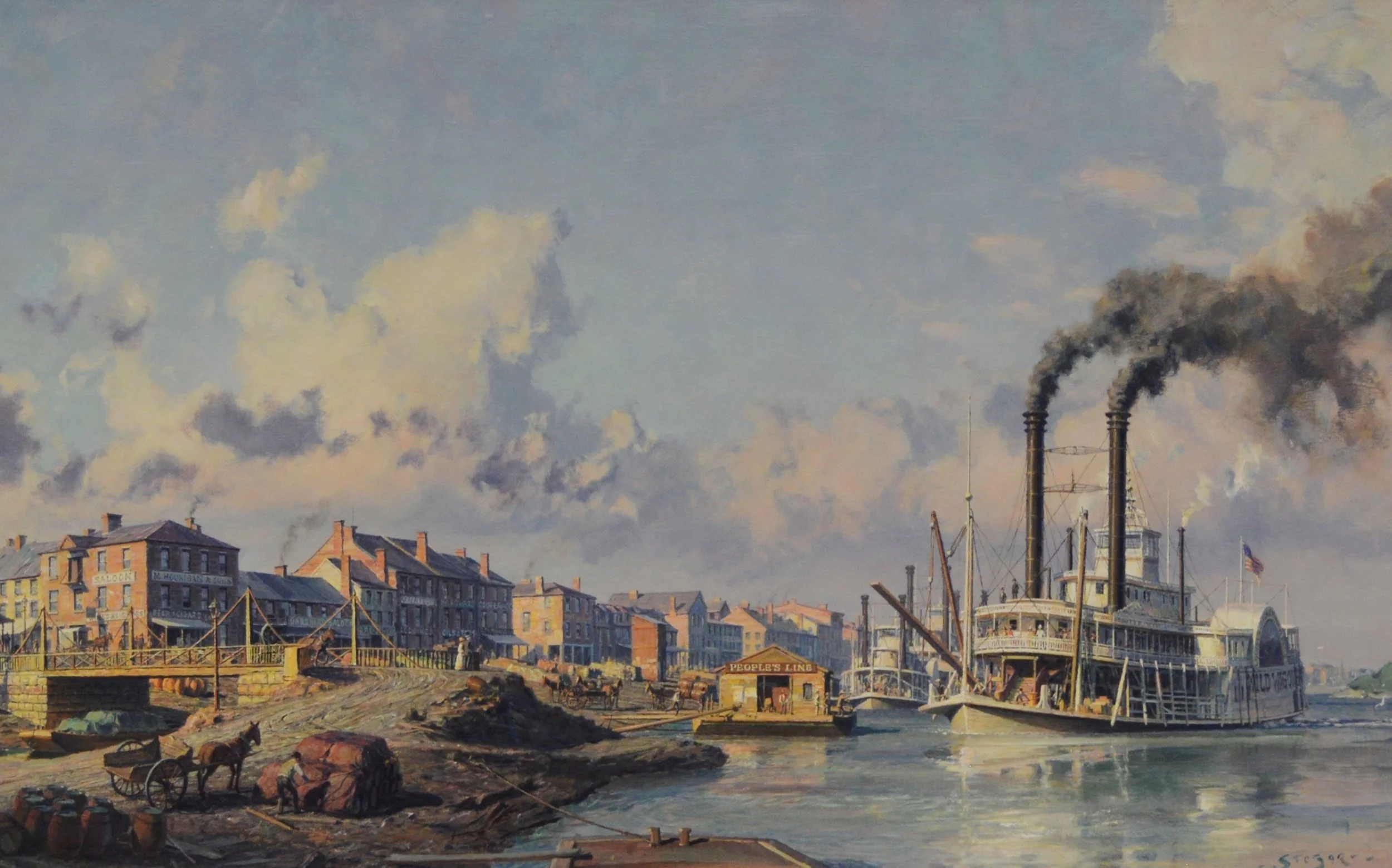
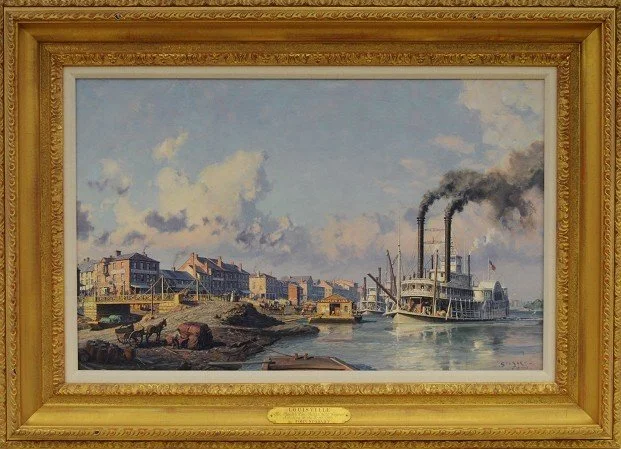
Louisville, The People's Line Packet-Wild Wagoner Arriving at the Levee in 1868
Oil on canvas
18 x 29”
27.5 x 37.5” Framed
Louisville: The People's Line Packet "Wild Wagoner" Arriving at the Levee in 1868 is a meticulously detailed oil painting that captures the bustling riverfront of Louisville, Kentucky, during the height of steamboat commerce. Created in 1993, the work portrays the Cincinnati–Louisville packet steamer Wild Wagoner approaching the People's Line wharf-boat at mid-morning, with residents engaging in daily activities along Water Street . Stobart's composition includes historical landmarks such as the mouth of Beargrass Creek and Corn Island, reflecting the city's early development.
John Stobart
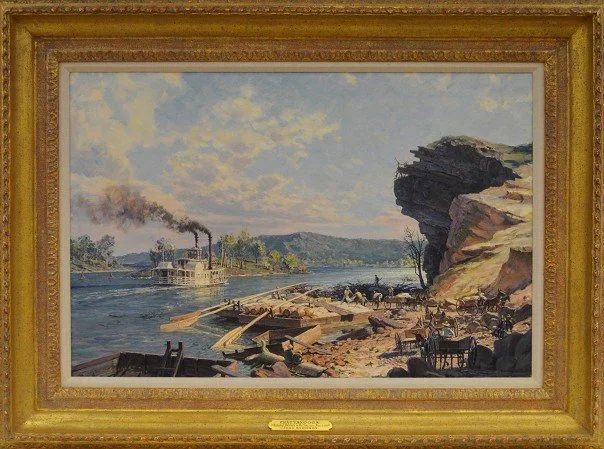
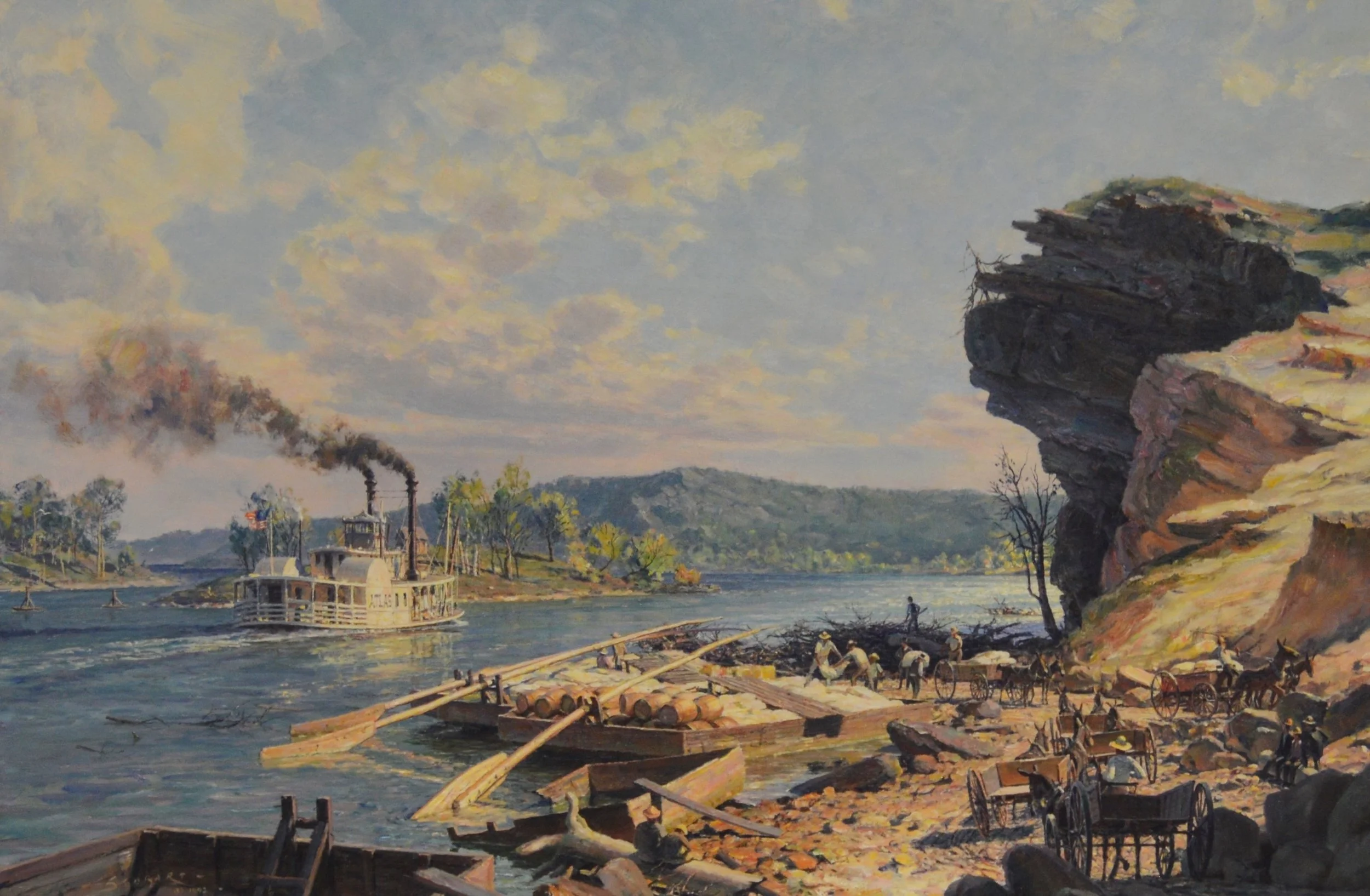
Chattanooga, Unloading Flatboats on the Tennessee River in 1848
Oil on canvas
20 x 30”
29 x 39” Framed
Chattanooga: Ross’s Landing, Unloading Flatboats on the Banks of the Tennessee River in 1848 is a historically evocative maritime painting that captures the economic and cultural vitality of mid-19th-century Tennessee. Created in 1992, the work portrays Ross’s Landing—named after Cherokee leader John Ross—as a bustling riverfront hub where flatboats, laden with goods such as corn, whiskey, and preserved meats, are being unloaded for trade . Stobart's meticulous attention to period-specific details, including the architecture, vessels, and attire, reflects his dedication to historical accuracy. The painting's atmospheric lighting and composition underscore the significance of river commerce in the expansion of the American frontier.