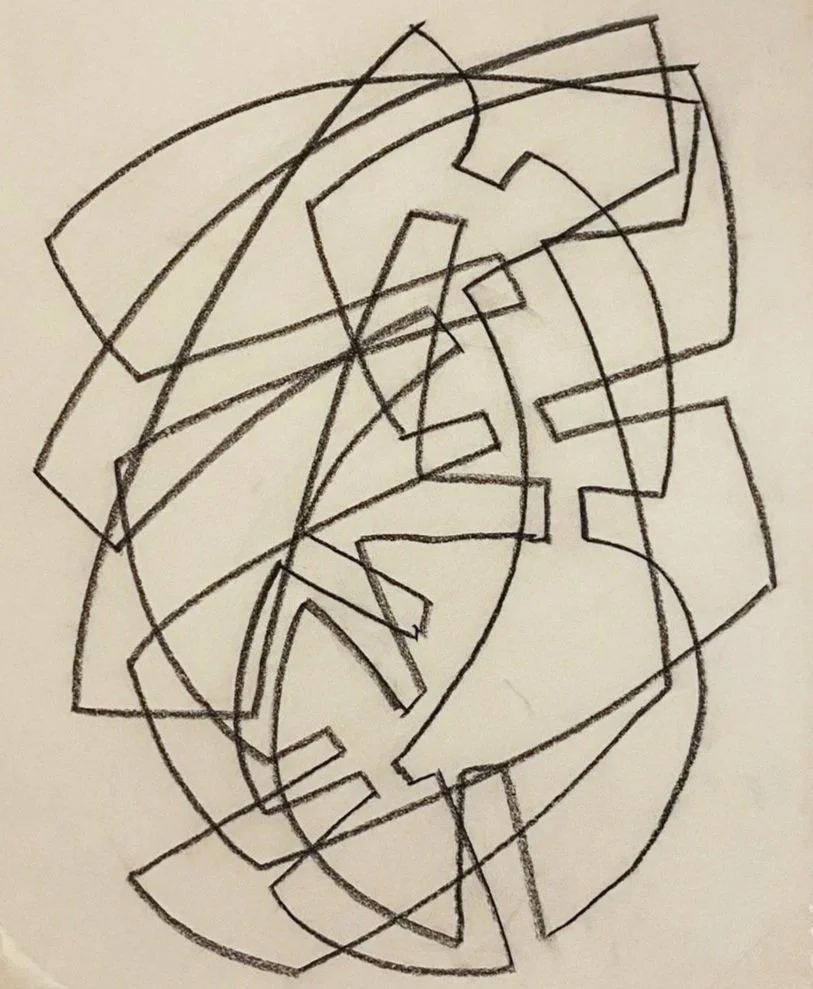
Otto Neumann (1895-1975) was a German expressionist painter and printmaker. Neumann made work based on the human form and his own literary interests, including Dante's Inferno, African fairy tales, and the Passion of Christ. During the Nazi regime, Neumann's work was labeled as "degenerate"; his refusal to divorce his Jewish wife, Hilde (whose family later fled the country) further hurt his prospects. After the war he still took an interest with the subjects of classical antiquity and myth, but never returned to the medium of oil or watercolor. He became depressed and reliant on medication, and eventually self-admitted to a sanitarium, but continued to work. It was only a year after Hilde's death in 1970 that he stopped producing work entirely.
Many artists that were young during the later part of Neumann's career drew inspiration from and identified with his highly abstracted forms. Much of Neumann's earlier work, on the other hand, would have been destroyed by the artist himself had it not been for Hilde taking and storing them. It is thanks to her that, to this day, some of his early work is still known and regarded highly.
Charcoal on paper 23.5 x 17 ″
Otto Neumann (1895-1975) was a German expressionist painter and printmaker. Neumann made work based on the human form and his own literary interests, including Dante's Inferno, African fairy tales, and the Passion of Christ. During the Nazi regime, Neumann's work was labeled as "degenerate"; his refusal to divorce his Jewish wife, Hilde (whose family later fled the country) further hurt his prospects. After the war he still took an interest with the subjects of classical antiquity and myth, but never returned to the medium of oil or watercolor. He became depressed and reliant on medication, and eventually self-admitted to a sanitarium, but continued to work. It was only a year after Hilde's death in 1970 that he stopped producing work entirely.
Many artists that were young during the later part of Neumann's career drew inspiration from and identified with his highly abstracted forms. Much of Neumann's earlier work, on the other hand, would have been destroyed by the artist himself had it not been for Hilde taking and storing them. It is thanks to her that, to this day, some of his early work is still known and regarded highly.